Packaging Insights
We commissioned research on branded void fill. Here's what 400 consumers told us.
Most brands assume their packaging inside the box is invisible. Something functional, forgettable, a line item in the ops budget. Ship it. Done.
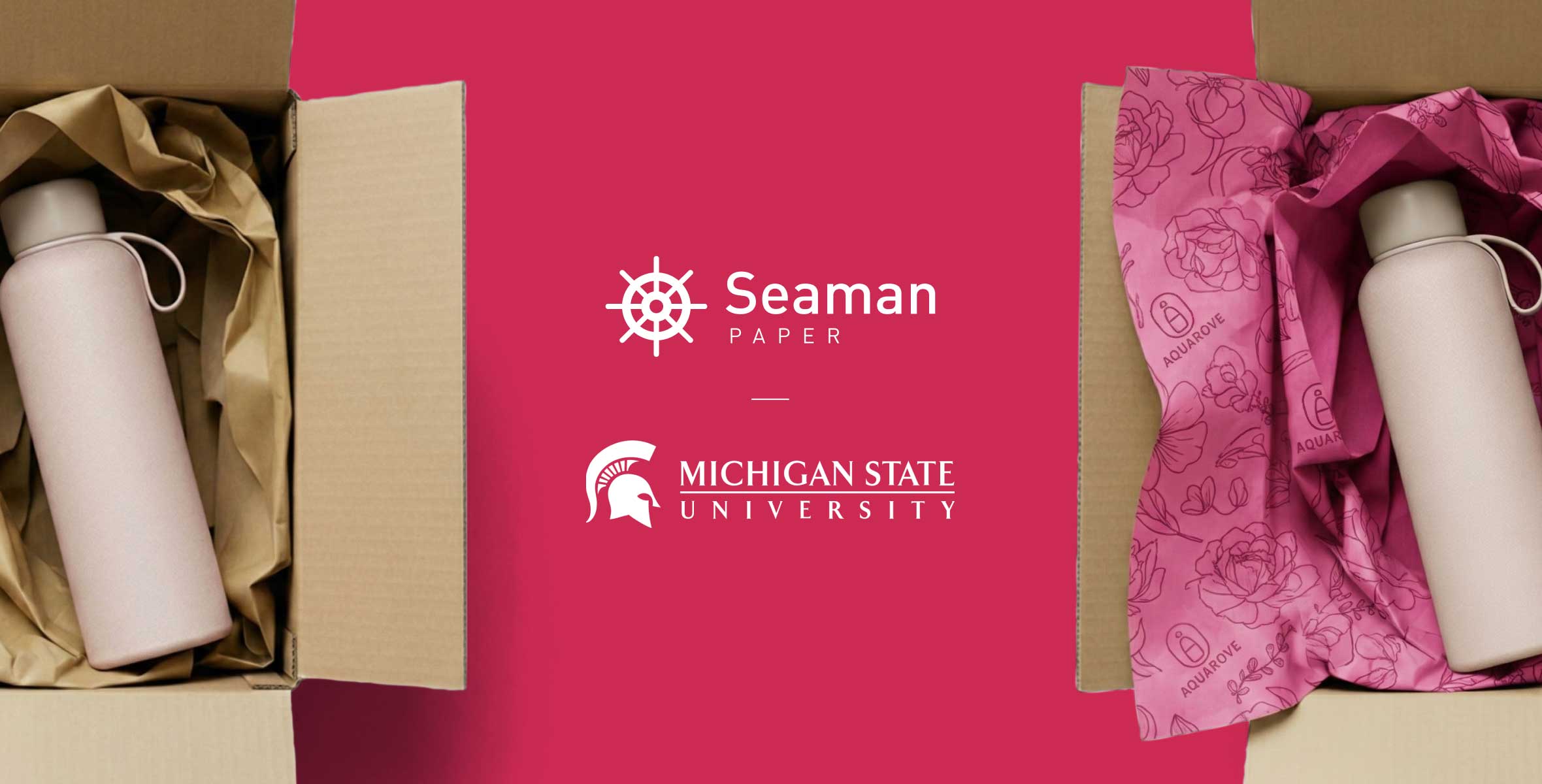
We weren't sure that assumption was right. So we partnered with Michigan State University to find out.
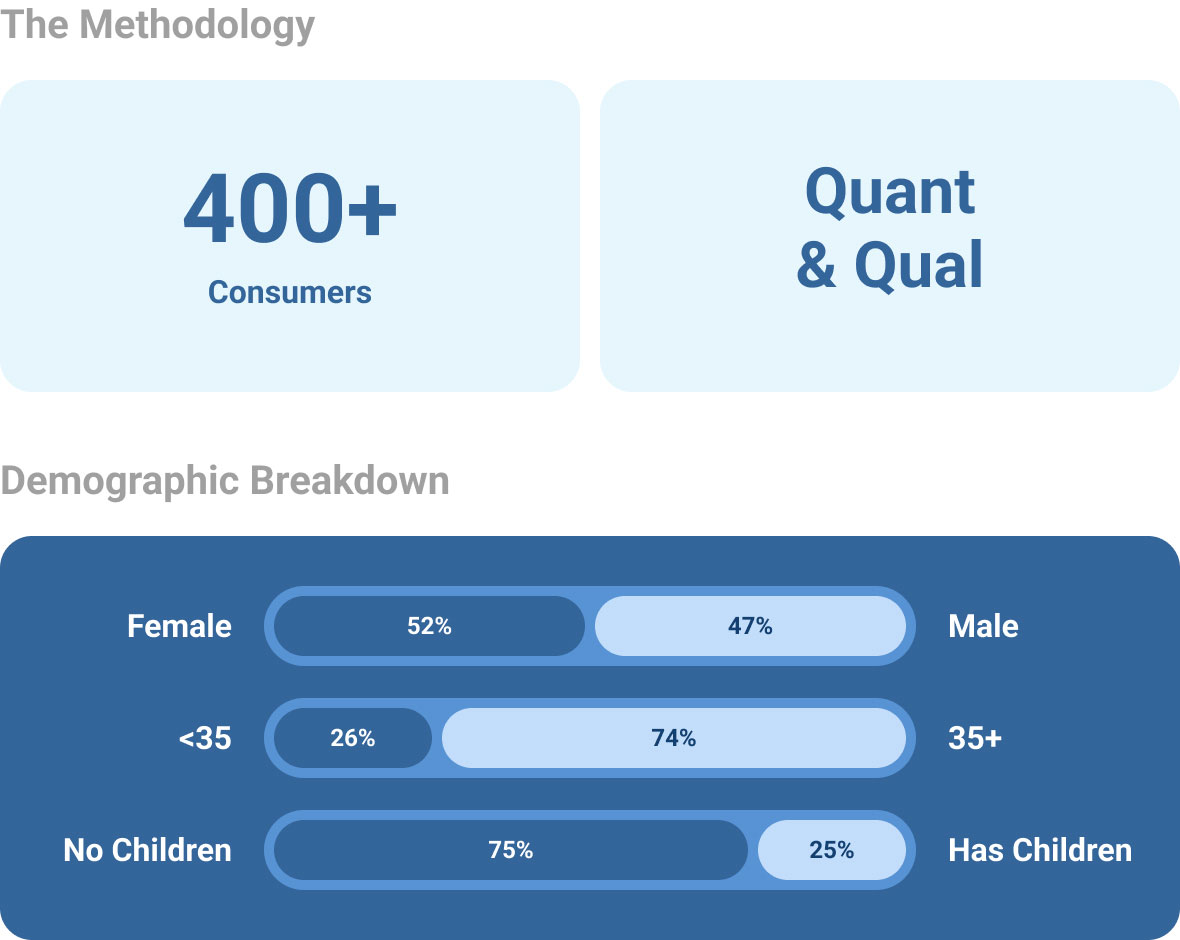
The result is the MSU National Consumer Study on branded internal packaging – 400+ census-balanced US adults, with a quantitative survey plus qualitative focus groups. The question we asked: does branded internal packaging actually change consumer behavior? And if so, how much?
Key findings at a glance
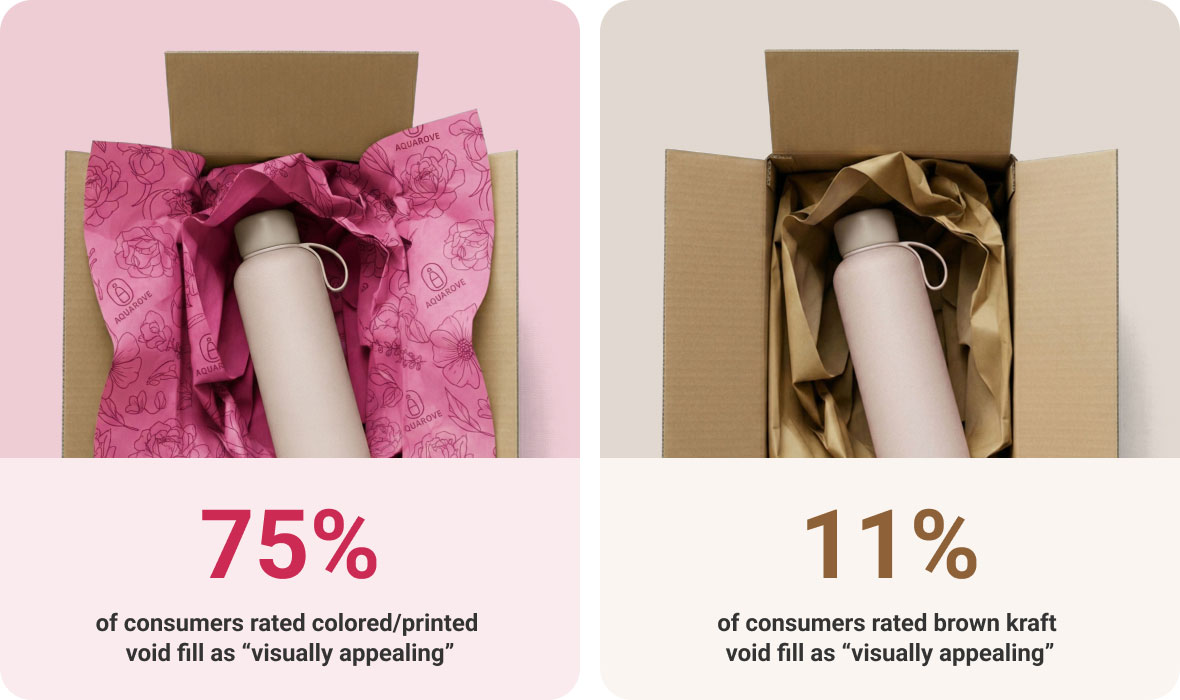
- 75% vs. 11% – branded void fill scores 75% on visual appeal; plain kraft scores 11%
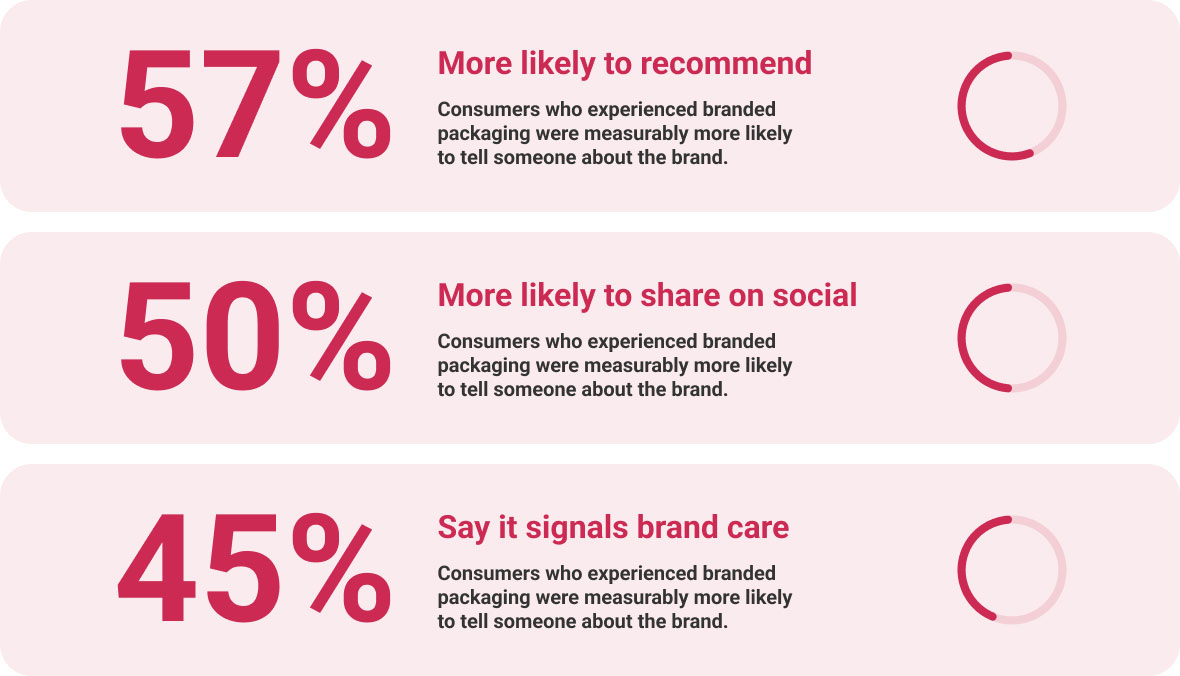
- 57% more likely to recommend the brand after a premium unboxing
- 50% more likely to share the unboxing on social media – unprompted and unpaid
- 45% say branded internal packaging signals a detail-oriented brand that cares
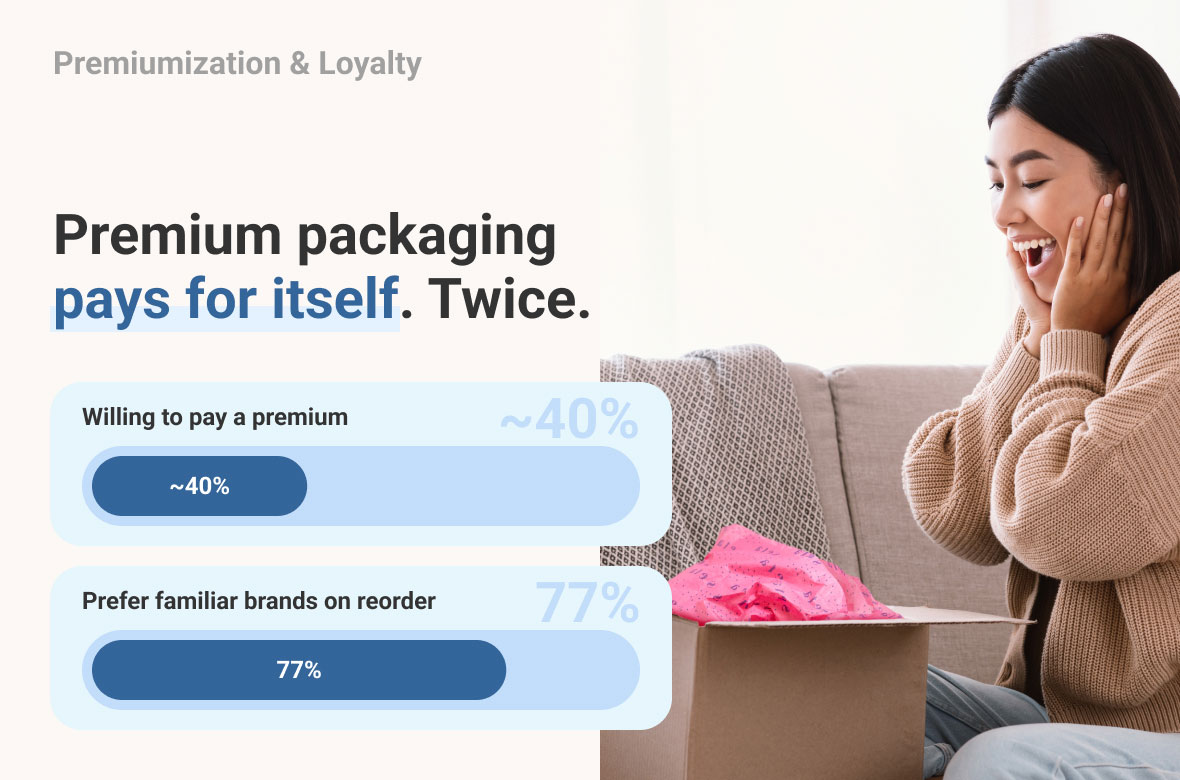
- ~40% willing to pay a higher price point for a product with premium packaging
- 77% prefer to reorder from familiar brands – making every shipment a retention touchpoint
About the research
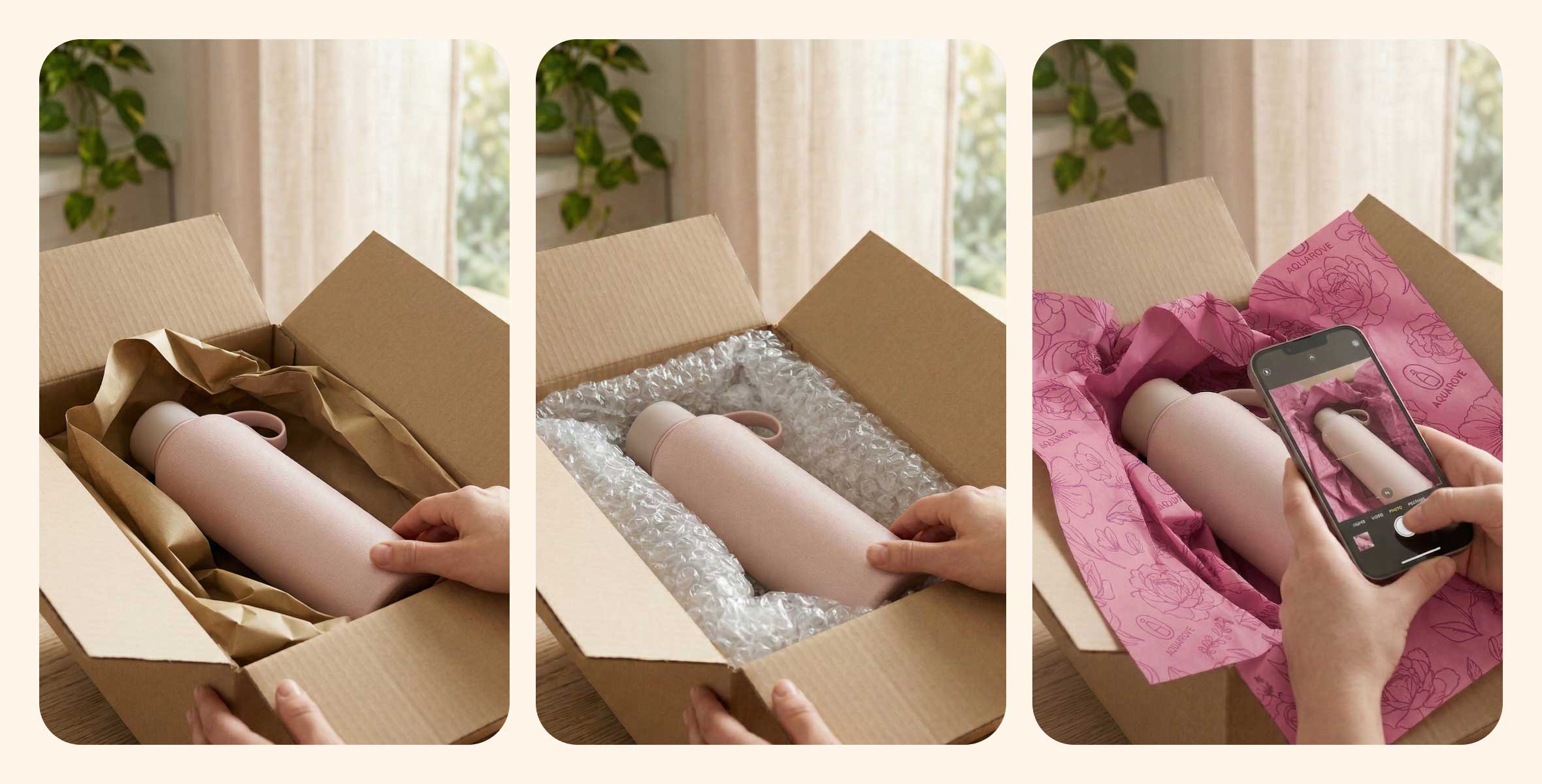
The MSU National Consumer Study was conducted by Michigan State University in collaboration with Seaman Paper. The study included 400+ census-balanced US adults. Researchers tested six packaging formats – plain brown kraft, bubble wrap, SpiroPack™, crinkle shred, SatinPack™ colored void fill, and SatinPack™ branded void fill – using a quantitative survey combined with qualitative focus groups. All statistics cited in this post are drawn from that independent study.
The baseline: what plain kraft actually signals
Before measuring the impact of branded packaging, the study measured how consumers respond to what most brands ship today: plain brown kraft paper.
Plain kraft scored 11% on visual appeal.
Bubble wrap barely did better, at 13%. Custom branded void fill with a brand's colors, logo, and pattern – scored 75%.
That gap is not subtle. It's the difference between packaging that reads as an afterthought and packaging that reads as a brand decision. And consumers notice.
The 75% vs. 11% finding alone reframes the conversation. But the study didn't stop at perception. It went further and asked: what do consumers actually do differently when the internal packaging is premium?
What changes when the packaging is branded
The behavioral findings are where the research becomes a business case.
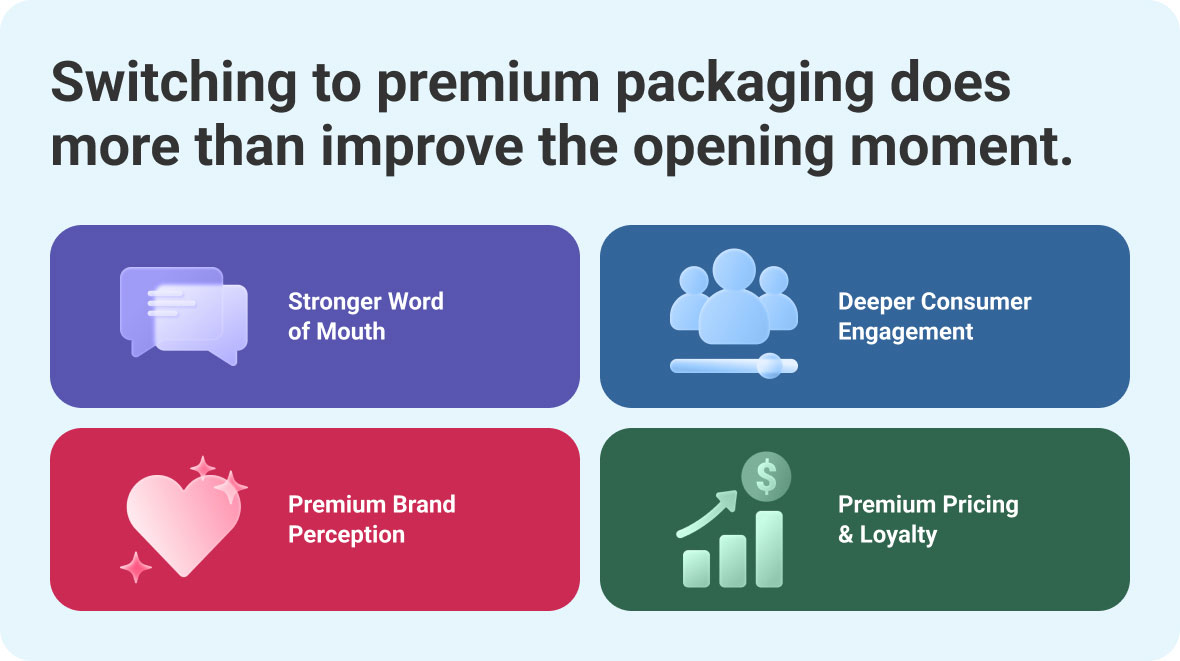
Recommendation Intent: Consumers who experienced branded internal packaging were 57% more likely to recommend the brand to someone else. Not the product – the brand. A single packaging decision rippling into word-of-mouth.
Social Sharing: 50% said thoughtful packaging made them more likely to share their unboxing on social media – unprompted and unpaid. No influencer budget. No seeding program. Just a box that looked worth sharing.
Brand Perception: 45% said premium internal packaging signals a brand that is detail-oriented and cares about what it ships. Packaging is being read as a proxy for how much the brand respects its customers.
Willingness to Pay: ~40% of consumers said a premium unboxing experience would justify a higher price point for the same product. The packaging is functioning as a pricing signal.
These four findings operate together. Better internal packaging generates more word-of-mouth, more organic social content, higher perceived brand quality, and more pricing latitude – all from a material decision that most brands treat as an ops commodity.
The loyalty signal
One finding stood apart from the behavioral data and deserves its own attention.
77% of consumers prefer to reorder from brands they already know.
This isn't a packaging stat in isolation. It's a retention stat with packaging implications. Every shipment a brand sends is a touchpoint in the reorder decision. If the experience inside the box reinforces the brand – its colors, its care, its identity – that recognition compounds over time. If the box opens to plain brown kraft, that recognition opportunity disappears.
For high-volume eCommerce brands shipping tens of thousands of orders a month, the math adds up quickly.
The sustainability expectation
The study also measured consumer expectations around sustainable internal packaging – and the numbers suggest this is no longer optional for brands that care about their reputation.
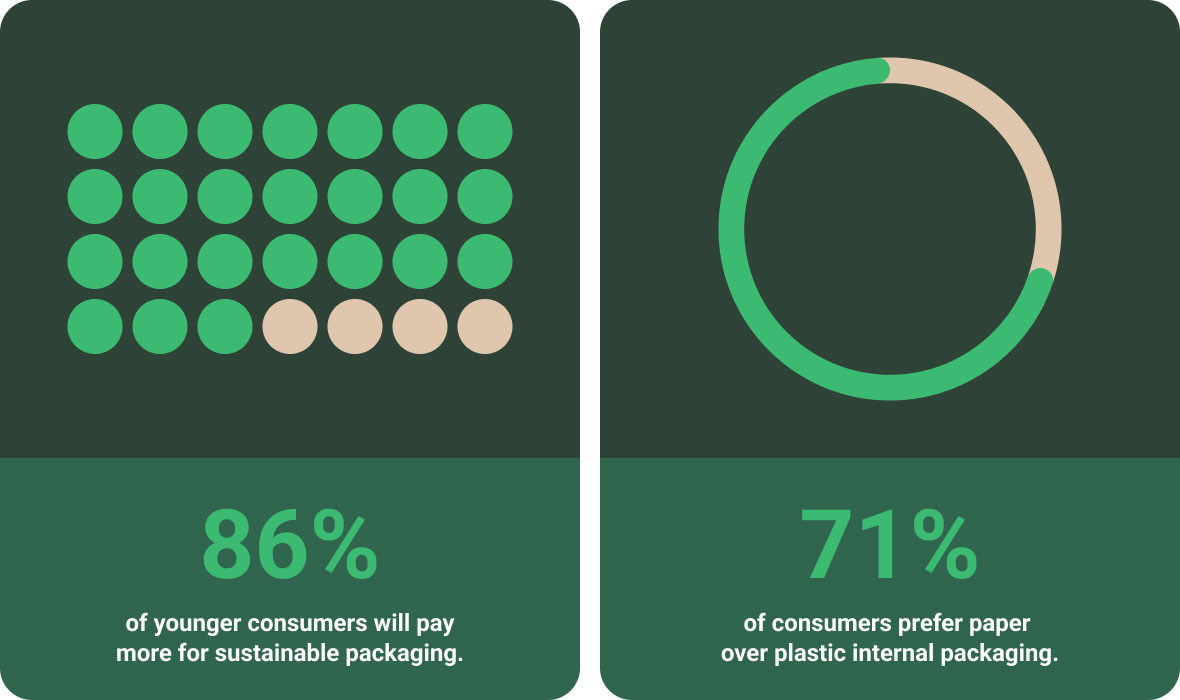
- 75% of consumers expect sustainable internal packaging as standard.
- 86% of younger consumers said they would pay more for sustainable packaging.
- 71% said they prefer paper over plastic internal packaging.
These figures matter for a specific reason: sustainable and branded are not in tension. SatinPack is FSC™ certified (FSC C102852) and curbside recyclable. Brands switching from plastic bubble wrap or single-use poly fill to branded void fill are simultaneously making the sustainability upgrade their customers expect and the brand upgrade the research supports.
What this means for your brand
The MSU study is not an argument that pretty packaging is nice to have. It's a documented connection between a material decision and measurable consumer outcomes.
Every brand shipping in plain brown kraft has already made a packaging decision. Most just made it by default.
The research is available in full. If you want to see the complete findings – methodology and the full consumer data – you can download the report below.